
The is Here: Meet the Nuclear-Diamond Battery That Could Last Thousands of Years
Imagine a world where you never have to charge your devices again. The only reason you’d visit the electronics aisle would be to admire the aesthetic improvements in case design. While that reality might sound as fantastical as riding a unicorn to work, scientists at the University of Bristol might just be turning this dream into reality. They’ve developed a battery that could outlast every smartphone upgrade, presidential term, and even some human civilizations—meet the nuclear-diamond battery.
A nuclear-diamond battery is a battery that uses a manufactured diamond to safely contain a small amount of carbon-14, a radioactive isotope of carbon. The battery generates electricity by nabbing fast-moving electrons from the diamond structure as carbon-14 decays.
Here are some features of nuclear-diamond batteries:
Long lifespan
Carbon-14 has a half-life of 5,700 years, meaning the battery will keep half of its power for thousands of years.
Safe
The diamond casing absorbs the short-range radiation emitted by carbon-14, keeping it safe.
Sustainable
The battery is a lasting way to produce microwatt levels of power.
Applications
The battery could be used in a variety of applications, including space technologies, security devices, medical implants, and robots.
In 2020, Tom Scott, a materials scientist at the University of Bristol, and Neil Fox, a chemist at Bristol, created a company called Arkenlight to commercialize the nuclear-diamond battery. The battery is still in the prototyping phase, but it’s already showing improvements in efficiency and power density compared to existing nuclear batteries
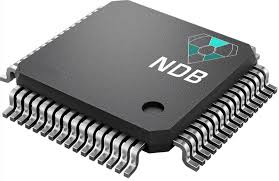
What Exactly is a Nuclear-Diamond Battery?
Long-time Slashdot reader fahrbot-bot dropped this mind-boggling nugget from LiveScience: a battery powered by a diamond with an embedded radioactive isotope. No, it’s not the bling for some billionaire’s next extravagant watch—although, who knows, that could be next. The nuclear-diamond battery uses fast-moving electrons, excited by radiation, in a manner like how photovoltaic cells convert sunlight into electricity. It’s like taking solar energy’s hip younger sibling out for a spin.
“Diamond is the hardest substance known to man; there is literally nothing we could use that could offer more protection.” – Neil Fox, Professor of Materials for Energy at the University of Bristol
The Science Behind the
Initially showcased in 2017, the diamond battery prototype used nickel-63 as its radioactive base. The current iteration, but, pivots to carbon-14 isotopes embedded within synthetic diamonds. Now, before you picture a radioactive necklace as part of the next haute couture collection, it’s important to note the safety have: carbon-14 emits short-range radiation that solid materials quickly absorb, ensuring the battery is safe to handle—albeit not as safe to swallow.
Here’s Why Carbon-14 Was Chosen:
- It emits short-range radiation, reducing health risks.
- Its half-life is 5,730 years, offering new longevity.
- The diamond enclosure ensures no radiation escapes.
The kicker? A nuclear-diamond battery containing just 0.04 ounces of carbon-14 can deliver 15 joules of electricity daily. This is equivalent to using a flashlight sparingly over 24 hours—but it could keep going for millennia. For comparison, an AA battery of about 0.7 ounces sports an energy-storage rating of 700 joules per gram but is as transient as a New York fashion trend.
The Cosmic Implications
“Alexa, how long will it take to reach Alpha Centauri using a diamond battery?” Oh, just about the time you finish binging every show on your watchlist. This battery’s longevity could mean a spacecraft powered by it could reach our nearest stellar neighbor, Alpha Centauri, without needing a jump start. Let that sink in as you stare up at the Denver night sky, pondering the wonders of the universe.
No Moving Parts, No Carbon Footprint
Perhaps the most tantalizing have of this power source is its simplicity and environmental friendliness. No moving parts. No maintenance. No carbon emissions. It’s practically the zen master of energy solutions. Austin’s techies could soon find themselves pondering whether to plug in their laptops or let them bask in the eternal glow of a diamond battery.
Advantages of Nuclear-Diamond Batteries:
- Exceptional longevity that could outlast modern civilizations.
- Safe and get with minimal radiation risks.
- Environmentally friendly, promoting lasting tech advancements.
“We’re effectively turning nuclear waste into power sources, all without leaving a carbon footprint. It’s as if someone said, ‘Let’s make nuclear cool again.’ And, frankly, we’re here for it.” – Optimistic Energy, renowned energy expert
Applications: The Sky’s the Limit
From Los Angeles’s glitzy, sunlit tech conventions to the quieter, creative corners of San Diego’s burgeoning tech scene, the possibilities of these batteries are immense. They promise a where power is as permanent as San Francisco’s fog and as plentiful as New York’s traffic lights. Who knew diamonds could be more than just a city girl’s best friend? Now they’re eyeing the role of Earth’s silent sentinel in our energy system.
Conceive the Possibilities:
- Smartphones that never need charging.
- Pacemakers with lifespans longer than any current recipient’s needs.
- Space missions that don’t end up as a Netflix documentary on “The Space Voyage That Could Have Gone Better.”
Of course, as with any technological breakthrough, this development raises some questions. Would this mean an end to the excuse of “My phone died” during unwanted calls? Could our fondness for routine charging rituals become obsolete? In this bright , perhaps the only thing left to ‘recharge’ will be our humor at the irony of it all.
Nuclear-Diamond Battery: Powering Devices for Millennia
Imagine a battery that could last for thousands of years without needing a recharge. Sounds like science fiction, right? Enter the Nuclear-Diamond Battery (NDB), a pioneering innovation that harnesses nuclear energy to create long-lasting power sources. With its potential to metamorphose energy storage, the NDB might outlast not only your gadgets but even your patience for their shifting updates.
But who needs a millennia-lasting battery? Let’s explore the fascinating science, practical applications, and, of course, a lighter take on what it means to never have to charge your devices again.
The Science Behind Nuclear-Diamond Batteries
At the core of the NDB’s innovation is its ability to convert nuclear waste into clean, sustainable energy. Here’s how it works:
How It Works
- Radioactive Isotope: The battery uses carbon-14, a radioactive isotope extracted from nuclear waste.
- Diamond Encapsulation: The isotope is encased in synthetic diamonds, which absorb radiation and convert it into electricity.
- Energy Harvesting: The diamonds produce a small but consistent electric current over thousands of years.
Why It’s Safe
- The radioactive material is fully encapsulated, preventing radiation from escaping.
- It operates passively, requiring no moving parts or maintenance.
Energy Output
While the power output of a single NDB is modest, it’s enough to run low-energy devices indefinitely—or to power larger systems by stacking multiple units together.
Who Needs It? Just EnsurE Not to Leave Your Nuclear Battery in the ‘On’ Position Next to the Pet Fish!
While a nuclear-diamond battery might seem like overkill for your smartphone, its applications extend far past consumer electronics. But, a few cautionary tales (and fishy mishaps) might give us pause.
Applications
- Medical Devices: Pacemakers and implants could operate for a lifetime without replacement jumpries.
- Space Exploration: Spacecraft and satellites can use NDBs for uninterrupted power across decades-long missions.
- Military Use: Remote sensors, drones, and transmission systems in isolated regions.
- IoT Devices: Smart home gadgets that never need a battery swap
Diamond nuclear batteries are useful for devices that need low discharge rates over long periods of time, such as those used in space, medicine, and other applications:
Medical devices
Diamond batteries can power pacemakers, hearing aids, and other implants for decades without needing to be replaced. This can reduce patient discomfort and surgical risks.
Space research paper
Diamond batteries can power spacecraft, satellites, and radio frequency (RF) tags for decades. This can reduce costs and extend operational lifespans.
Seabed transmissions
Diamond batteries can power machinery that operates in difficult and dangerous environments, like oil and gas machinery on the seabed.
Microelectronics
Diamond batteries can be used in microelectronics.
Home appliances
Diamond batteries could be unified into home appliances to turn them off completely while still holding data and parameters.
Robots
Diamond batteries could power small robots used for surveillance or door-to-door delivery.
Diamond batteries are made from manufactured diamonds that encase small amounts of carbon-14. The carbon-14 is extracted from nuclear waste. The batteries can last for thousands of years without being charged or replaced
What About Everyday Use?
- Conceive never charging your phone again—but also not accidentally leaving it near sensitive items like pet aquariums (we’re looking at you, clumsy hands).
The Only Thing Left to Recharge is Our Today’s Tech News —And Maybe Our Coffee!
Traditional batteries are infamous for dying at the most inconvenient times—like right before an important Zoom call. Nuclear-diamond batteries promise to eliminate the need for constant recharging, leaving us with only our sense of humor and caffeine cravings to maintain.
Advantages of NDBs Over Traditional Batteries
| Feature | Nuclear-Diamond Battery | Traditional Battery |
|---|---|---|
| Lifespan | Up to 28,000 years | 2–5 years |
| Environmental Impact | Recycles nuclear waste | Toxic waste during disposal |
| Maintenance | None required | Frequent recharging |
| Energy Density | Consistent over millennia | Decreases over time |
With NDBs, you can bid farewell to battery anxiety. Your devices will outlive not just your morning coffee but your longest Netflix binge session.
Breaking: Nuclear-Diamond Batteries Outlast Marriages, Bad Haircuts, and Those ‘We Need to Talk’ Texts!
When you think about a battery lasting thousands of years, it puts everything else in perspective—temporary problems like bad haircuts or awkward conversations suddenly seem insignificant.
Longevity in Context
- Marriages: The average marriage lasts around 8 years. NDBs could power the family gadgets through countless anniversaries.
- Fashion Trends: Bad haircuts are fleeting; an NDB-powered trimmer might stick around for a few centuries.
- Texts You Regret: By the time the battery runs out, your awkward message will be long forgotten (probably).
Fun Uses
- Powering family heirlooms—an electric clock that stays in the family for generations.
- Supporting time capsules—energy for devices left for subsequent time ahead civilizations to find.
- Keeping your electric toothbrush alive—forever (but don’t forget to replace the bristles).
and Criticisms
While the nuclear-diamond battery is radical, it’s not without its hurdles:
- Cost: Synthetic diamonds and radioactive isotopes aren’t cheap, making these batteries an expensive investment.
- Power Output: Current designs are best suited for low-energy devices, limiting broader applications.
- Public Perception: Many remain wary of anything involving the word “nuclear,” despite its safety.
Nuclear-Diamond Batteries
As technology advances, NDBs could scale to power larger devices and systems, from electric vehicles to entire smart cities. Their ability to give sustainable, maintenance-free energy could reduce reliance on fossil fuels and mold our approach to power consumption.
FAQs About Nuclear-Diamond Batteries
1. Are nuclear-diamond batteries safe?
Yes. The radioactive material is completely encapsulated in synthetic diamonds, preventing any harmful radiation from escaping.
2. Can NDBs replace long-established and accepted batteries?
For now, NDBs are perfect for low-energy devices but may grow to power larger applications in the .
3. What happens when the battery runs out?
After thousands of years, the battery will stop producing electricity, but the material remains safely contained.
4. Are they environmentally friendly?
Absolutely. NDBs recycle nuclear waste, offering a sustainable energy solution and reducing nuclear byproducts.
5. How expensive are nuclear-diamond batteries?
The cost is currently high due to the materials involved, but prices are expected to decrease with advancements in production.
The nuclear-diamond battery is a leap forward in energy technology, promising a where recharging is a thing of the past. Whether it’s powering a pacemaker or your favorite gadget, this innovation could redefine how we think about energy—one millennia at a time.

