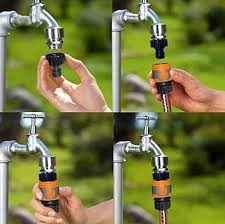
A quick-connect fire hose coupling earns a “game changer” label only if it does three things. It has to join hose to hydrant or hose to hose faster than a threaded coupling. It can’t cross-thread or fail under pressure. And it has to meet the national hose-connection standard so it works with the equipment fire departments already own. A Shark Tank pitch can show speed. Only independent testing and standards compliance prove safety. Use the checklist below on any connector you see on TV.
What problem does a faster fire hose connector solve?
Most U.S. fire hose still uses threaded couplings. The 2½-inch National Hose (NH) thread has 7.5 threads per inch, and the 1½-inch has 9. Threaded couplings can fail in three common ways:
- Cross-threading. If the threads start crooked under time pressure, the joint can leak or blow apart once charged.
- Thread mismatch. Some older city systems still use local threads or NPSH (pipe thread). Units from different departments that respond together can arrive with couplings that won’t mate without an adapter.
- Tool dependence. Seized couplings need spanner and hydrant wrenches, and every step takes seconds from the time water is needed.
The hydrant hookup is usually the slowest step in establishing a water supply. A connector that cuts it from 30–60 seconds to under 10 is a real gain, but only if nothing else gets worse.
Is quick-connect fire hose technology actually new?
No. The Storz coupling has been in use since the late 1800s. Its halves are identical, so there is no male or female end. They lock with a quarter turn and have no threads to cross. Most U.S. departments already use Storz on 4- and 5-inch large-diameter supply hose. New products in this category usually change one of four things: the locking mechanism, the weight, adapter compatibility, or the price. They rarely invent a new principle. Ask exactly which of these a product improves.
What standards must a fire hose connector meet?
Hose couplings and fittings in the U.S. are covered by NFPA 1960. Its 2024 edition merged the former NFPA 1961 (hose), 1962 (care and service testing), 1963 (connections) and 1964 (nozzles) into one standard. It sets thread dimensions, coupling performance and test pressures. Attack hose is typically service-tested at 300 psi and supply hose at 200 psi, with the coupling joint tested as part of the assembly.
Fire brigades at private employers fall under OSHA 29 CFR 1910.156, which requires equipment to be maintained and inspected. A connector that hasn’t passed the relevant NFPA tests can create liability for any department or facility that puts it in service.
How do you verify a Shark Tank product’s safety claims?
| Check | What to look for | Red flag |
|---|---|---|
| Standards | A written statement of NFPA 1960 compliance and the test report | “Meets or exceeds” with no document behind it |
| Third-party testing | A UL or FM listing, or results from an independent lab | In-house testing only |
| Patent | A granted patent you can look up in the USPTO patent database | “Patent pending” for years |
| Field use | Named departments using it in service, not just in demonstrations | Testimonials with no names |
| Compatibility | Adapters to NH, NPSH and Storz | Only works with its own system |
A deal made on air is not a closed investment. Many Shark Tank deals change or fall through during due diligence after taping. Check the company’s current status on ABC’s Shark Tank site and its own channels, not just the episode.
Who actually benefits from a better connector?
Volunteer and rural departments get the most out of one. They are short on staff, depend heavily on mutual aid and draft water from many different sources. U.S. Fire Administration data shows that most U.S. fire departments are all-volunteer or mostly volunteer, and those crews often hook up hydrants with one or two people. Industrial sites, marinas and farms with their own standpipes or tanks are a second market.
Prices depend on material and size. Brass and aluminum Storz adapters generally cost $100–$400 each, and hydrant-mounted Storz adapters cost more. A new connector has to beat that price, or clearly outperform it, to replace equipment departments already trust.
Why do safety products like this play so well on TV?
As a production company, we see the pattern often: a product that solves a problem in seconds, on camera, is easy to film. A side-by-side clip of a threaded coupling against a quick-connect, with a timer on screen, makes the case without narration. That visual proof is why safety gear gets airtime. It is also why buyers should treat the demonstration as a claim to verify, not as evidence. The best product videos in this category include the standards certificate, a lab pressure-test clip and a real crew using it in training. If a manufacturer’s video shows only the fast hookup, ask for the rest.

