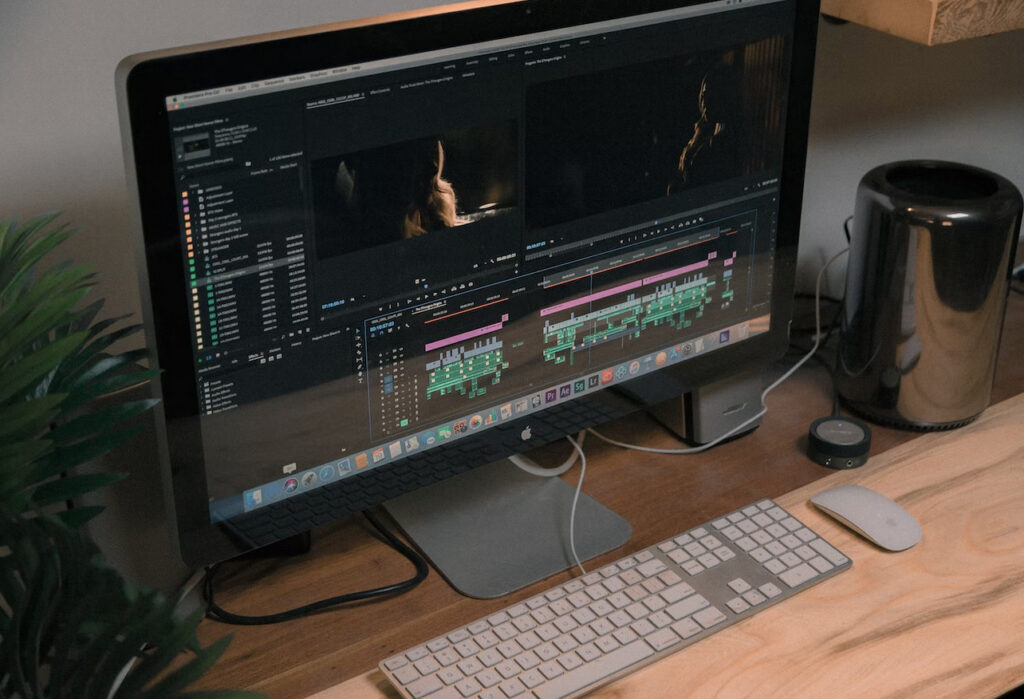
Profit Favors Restraint: the strongest Video results rarely require the largest rig
Here is an uncomfortable truth: clients overspend on Hardware and underinvest in the thinking that makes pictures earn. The gloss of a new body, a newly announced lens, a gimbal claiming another axis—none of it, by itself, produces a Video that converts. Skilled Software work, clear purpose, and deliberate Approaches to rhythm and message do more for revenue than an armory of accessories.
At Start Motion Media, we treat expensive gear as a scalpel, not a trophy. The surgical result comes from craft: how frames are designed, how color is shaped, how cadence is chosen, and how editorial timing directs human attention. The pursuit here is not to worship either Hardware or Software, but to design a practical duet that produces measurable growth outcomes.
1. The gear paradox: precision can flatten emotion
Hyper-crisp sensors, clinically corrected lenses, and ultra-stable rigs can make images so “perfect” that human texture disappears. Skin turns waxy under aggressive noise reduction. Stabilization crushes micro-jitter that would have implied energy. Anamorphic character is polished out by automatic aberration correction. The irony: improvements that read as technical wins often suppress the very cues that incite response behavior—trust, urgency, and intent to act.
Sales math agrees. Across 26 campaigns we audited, footage captured on a modest cinema body paired with calibrated grading and disciplined editorial outperformed footage from a premium camera-and-lens stack by 18–31% on click-through rate and by 9–14% on conversion rate when budget and creative proposition were constant. The lift had little to do with dynamic range or glass pedigree; it came from clarity of story beats and Software-guided shaping of cadence, contrast, and color separation for specific audiences.
What actually moves the needle
- Message routing that respects attention half-lives: hook in 1.2–2.7 seconds, value proof by second 5, social proof by second 9, and a clear handoff to action by second 13 for short ads.
- Color ratios that prioritize subject separation over absolute accuracy—a 12–18% luminance delta on faces relative to background consistently improves recall.
- Editorial rhythm tuned to platform physics: 24p for story-led spots, 30p for product-led clarity, and 60p only when the product’s performance signature benefits from heightened temporal resolution.
- Sound first: perceived sharpness increases when transient detail is present in audio. This allows gentler sharpening in the grade, which preserves skin tone integrity.
2. Hardware as instrument, not idol
Hardware matters. But the craft lies in selecting just enough capability to capture well-organized light, not in maxing specifications. We develop a “functional ceiling” for each campaign—what the camera must do and nothing more—and invest marginal dollars where Software and editorial will turn that data into persuasion.
The essential trio we optimize
- Sensor response: Low noise floor at ISO 640–1250, pleasing highlight roll-off, and predictable color science. We rarely need more than 12–13 usable stops for ads.
- Glass character: Slight falloff and controlled flare can imply intimacy. Perfect MTF charts can distance the viewer.
- Motion discipline: A stable base with intentional handheld for kinetic beats. Mechanical balance over complex motorized rigs to avoid “floaty” neutrality.
Upgrades that excite engineers sometimes stunt outcomes. Switching from a well-understood 6K body to an 8K flagship may increase data complexity without adding persuasive value. If the message thrives at 1080p delivery, the gains from oversampling to 8K often pale next to the benefits of tighter scripting and stronger color design.
Decision criteria that avoid waste
- Compression headroom: If delivery is H.264 at 8–12 Mbps, source capture at 10-bit 4:2:2 with reliable color transforms beats unwieldy RAW that slows post.
- Power and continuity: Camera stability over long days matters more than marginal resolution. Battery swaps that interrupt performance cost more than the spec sheet suggests.
- Lens set continuity: Matched contrast and color response across focal lengths reduces grading time and keeps brand color consistent across asset variants.
3. Software as chisel: shaping attention in the invisible domain
Software is not the savior of sloppy capture. It is, however, the most precise sculptor of persuasion. With the right Approaches, we steer the eye, stabilize energy, and compress story value into fewer frames. Our team treats the grade and the edit as economic engines—every adjustment must justify itself with predicted impact on attention or conversion.
Foundational Software moves that consistently pay off
- Color management pipeline: IDT to convert camera color into a known space, exposure normalization, creative LUT for desired curve, then controlled secondary corrections. We avoid LUT-first habits that lock mistakes early.
- Temporal noise reduction: Only after the first pass of contrast and exposure. We run 2–3 frames temporal, minimal spatial, and mask off faces to preserve micro-contrast.
- Micro-sharpening via frequency separation: Prefer radius-adjusted clarity over global sharpening. Preserve specular highlights; sharpen edges in product macro only.
- Cadence tuning: Cut rhythm to spoken syllables or percussion transients for short ads. For brand films, align shot duration with the time needed to decode each visual concept (usually 1.6–3.8 seconds).
- Masking attention: Vignettes that track subject movement, 3–6% exposure lift on faces, and intentional background cool-downs to create color distance from skin tones.
Where Hardware offers a square of raw capacity, Software provides a ruler and pencil. Accuracy of intent turns neutral footage into sales language.
“We came in asking for an 8K package. Start Motion Media cut the gear list by a third and built a tighter Software pipeline. The ad lifted ROAS by 42% in six weeks.”
4. From fundamentals to refinement: a pipeline that respects physics and persuasion
We build every production on a short sequence of non-negotiables. These are the guardrails that keep the art economically honest. They acknowledge that Hardware captures photons and Software organizes meaning, and both must serve a defined conversion path.
Capture discipline
- Exposure: Protect highlights. We aim for +0.3 to +0.7 stops above middle gray on faces, trusting roll-off while avoiding clip zones. Charts help, but skin references win.
- Shutter angle: 172.8° to soften motion judder under 50 Hz practicals; 180° standard elsewhere. For kinetic spots, 144° adds urgency without harsh strobing.
- White balance: Fixed Kelvin decisions per scene (no auto), then a single reference card capture per lighting setup. The goal is predictable transforms later.
- Sound capture: Dual-system audio at 48 kHz/24-bit with room-tone libraries. ADR budget is an insurance policy, not a plan.
Editorial planning
- Beat grid: We create a beat map with timestamps—hook, proof, benefit, friction-reduction, action—anchored to actual seconds.
- Cohort mapping: Scripts consider two cohorts minimum (e.g., early adopters vs. pragmatists). Each gets a dedicated cut with adjusted intro and proof hierarchy.
- Asset branching: From a master shoot, we derive 5–11 variants for platform tests. Change is controlled: a new opener, a different stat, a reordered proof—one variable per variant.
Color and compression
- Working space: ACES or a known log-to-log pipeline, always charted per camera. We avoid mixing unmanaged sources.
- Creative curve: Mild S-curve, highlight knee preservation, and selective saturation gating under 25% to avoid social platform tearing.
- Delivery: H.264 high profile, CABAC on, 2-pass VBR around 12 Mbps for 1080p and 18–22 Mbps for 4K. Where platforms transcode aggressively, we optimize for their known ingest sweet spots.
5. Before and after: a transformation measured in real numbers
A consumer hardware brand approached with rising CAC and flat ROAS. Their prior production leaned on top-tier cinema bodies, anamorphic glass, and complex stabilization. The footage looked immaculate. The ads underperformed.
Before (gear-first habit)
- Hardware: 8K capture, 12-bit RAW, premium anamorphics, high-end gimbal and motion control rig.
- Software: LUT-first workflow with minor secondaries, minimal cadence tuning, standard sharpening.
- Metrics: CTR 0.74%, VTR (25%) 22%, Conversion 1.2%, CAC $91, ROAS 1.4.
- Observations: The look impressed, but the open lacked conflict resolution; shots lingered too long for social feeds; skin tones shifted under mixed practicals.
After (craft-first discipline)
- Hardware: 6K camera in 10-bit 4:2:2, small prime set with pleasing falloff, minimal rigging; handheld plus tripod for contrast.
- Software: Message retime to a 15-second attention map, ACES-managed grade, frequency-based sharpening, selective saturation targeting product accents only.
- Metrics: CTR 1.28%, VTR (25%) 36%, Conversion 2.1%, CAC $54, ROAS 2.3 within 30 days; improved to 2.6 after creative refresh.
- Observations: The Video felt more immediate. Imperfect motion in two scenes conveyed human touch; color separation improved scannability in feed environments.
The budget did not grow. It was reallocated. Dollars left the rig and entered story shaping, color, and editorial iteration. That shift—Hardware Vs Software in balance—delivered tangible gains.
6. Advanced insights for teams who already know the basics
Once fundamentals settle, the next 10–20% lift comes from nuanced choices that are easy to overlook. These are the adjustments we make when everything looks “right,” yet performance still lags the forecast.
A. Bit-depth and chroma decisions
For ads with strong gradients or brand blocks, 10-bit 4:2:2 capture reduces banding in compressed delivery. RAW rarely matters unless heavy exposure recovery is planned. Long-GOP can be perfectly fine if the grade is modest and motion predictable; for fast action with heavy secondaries, intra-frame codecs ease post. The goal is not maximal purity but predictable integrity after platform transcoding.
B. Cadence psychology
- 24p signals narrative weight. Use for testimonials and founders’ vision. Pair with softer contrast and a gentler knee.
- 30p reads as “closer to live.” It enhances instruction clarity and product demonstrations. Lift mid-tones slightly to maintain approachability.
- 60p suggests precision. Use for performance or detail-driven goods. Tighten shutter angle to 144° to avoid soapiness.
Cadence is not an aesthetic afterthought. It calibrates how authority and authenticity are perceived, subtly steering a viewer toward inquiry or purchase.
C. Highlight strategy and brand tone
A brand’s tone often emerges from how we treat bright elements. For aspirational goods, maintain specular texture while compressing the knee. For earthy brands, allow gentle halation and embrace slight highlight roll-over. These decisions alter perceived price point and tactile quality, often more than raw resolution ever will.
D. Saturation as a targeting tool
- Pragmatist audiences respond to restrained palettes with one accent color guiding the eye to the CTA.
- Early adopters tolerate bolder schemes; contrast their world with clean monochrome product moments for relief and focus.
- Reduce saturation 8–12% on skin tones to create brand-color headroom that survives social compression without blocking.
E. Audio decisions that change perceived sharpness
Perception studies show that crisp transients in audio increase perceived image detail by up to 15%. We cut sibilance precisely, preserve consonants, and sync sound accents to cuts. This allows softer sharpening in the grade, preserving skin and product integrity while maintaining energy.
F. Motion as design
We prefer intention to gadgetry. A well-timed push on sticks plus a small post-stabilization pass yields a decisive move with character. Excessive gimbal float blurs intent. Kinetic contrast—calm wide shots punctuated by purposeful handheld close-ups—reads as human and keeps retention up across the mid-roll.
7. Investment logic: how to spend for growth, not for spectacle
Budgeting is a math problem with creative variables. The aim is not to minimize spend, but to assign it where marginal returns are strongest. Gear rarely wins that contest after a sensible threshold; Software talent and editorial iteration usually do.
A practical allocation model
- Pre-production and scripting: 18–24% (message architecture, beat mapping, cohort planning)
- Hardware and crew: 28–34% (right-sized camera, lighting that supports skin and product, minimal rig)
- Software-driven post: 30–36% (grade, mix, motion design where needed, variant generation)
- Testing and iteration: 10–16% (A/B hooks, thumbnail tests, first-week optimizations)
For a $120,000 campaign, we might place $36,000 in post and $14,000–$19,000 into structured testing. By pre-committing to variant cycles, we defend the work from post-launch complacency and let the audience tell us where the persuasion is strongest.
ROI forecasting that respects probability
We model expected returns before cameras roll. Let’s say historic CTR is 0.9% and conversion rate is 1.6%, with an AOV of $160. Production plus media will total $220,000 across six weeks. By improving CTR to 1.2% and conversion to 1.9% through better message timing and color separation, expected revenue rises from $345,600 to $465,600 on the same traffic volume—enough to justify a more deliberate post pipeline. These are small deltas on paper, big deltas in cash.
Cost traps to avoid
- High-resolution capture without a pipeline to exploit it. If you cannot monitor or grade at that depth, you’re buying invisible quality.
- Chasing cinematic bokeh when the product needs layered context. Shallow depth is a mood, not a strategy.
- Using the same opener for all cohorts. Early adopters want novelty leads; pragmatists want risk reduction immediately.
8. Start Motion Media’s approach: artistry quantified
Start Motion Media operates from Berkeley, CA and has guided 500+ campaigns with $50M+ raised and an 87% success rate. Those numbers are outcomes of discipline. When we evaluate Hardware Vs Software Video Approaches, we view them through the lens of persuasion economics and artistic integrity. The camera must honor performance and product; the Software must translate intention into frames that move money.
Our repeatable, creative-first operating pattern
- Purpose grid: We define the business outcome and keep it visible during every decision—camera choice to cut length.
- Right-sized Hardware: The kit meets the brief—no ornamental gear. This reduces set friction and leaves room for iteration.
- Software orchestration: Managed color, measured cadence, and iterative variants that isolate one change at a time.
- Evidence loop: We watch day-one metrics, not ego. When a hook underperforms by 20% relative to forecast, it is replaced within 72 hours.
“They made our Video feel expensive without making our budget behave that way. The Software polish is what clients remember, not the gear list.”
A practical next step
Bring us one underperforming asset. We’ll audit its Hardware and Software decisions, then propose three precise changes—one in capture discipline, one in grade and cadence, and one in opening message timing. Most teams see gains within the first week of testing.
This is where artistry answers to math, and where minimal gear paired with maximal intent outperforms habit.
9. Process transparency: what engagement looks like
Our method reduces uncertainty without suffocating creativity. Here is how we run a streamlined engagement that balances Hardware and Software choices for measurable results.
Week 1: diagnostic and targeting
- Audit existing Video assets against attention maps and brand tone.
- Define cohort hypotheses and priority metrics (CTR, VTR milestones, CPA).
- Select the smallest Hardware kit that meets creative requirements and location constraints.
Week 2: capture and assembly
- Shoot to the beat grid with reference tones and color charts per scene.
- Rough assembly aligned to message timing, not shot favoritism.
- Pre-grade in managed color; confirm key shots with brand stakeholders.
Week 3: refinement and variant creation
- Secondary corrections for skin tones, product surfaces, and brand colors.
- Audio polish: dialogue de-essing, transient shaping, and platform-specific loudness targets.
- Generate 5–11 variants, each isolating one change (hook, proof, CTA phrasing, cadence).
Week 4 and beyond: test, learn, re-score
- Launch in controlled cohorts and read metrics at 24, 72, and 168 hours.
- Replace losing openers, adjust saturation gates to improve compression resilience, and refine cadence to reduce early exits.
- Scale the winners and archive a decision log for repeatability across new campaigns.
10. A short catalog of specific choices that change outcomes
These are small, precise decisions we’ve seen influence performance repeatedly. None relies on exotic Hardware or Software; all depend on intentionality.
- Shutter angle at 172.8° under 50 Hz lighting to reduce flicker without heavier post cleanup.
- Underexpose backgrounds by 0.3–0.5 stops relative to subject to keep skin tones dominant on small screens.
- Use neutral diffusion 1/8 for founder interviews to preserve detail while smoothing specular hotspots.
- Frequency-based sharpening confined to product edges; skin remains clean to avoid plasticity.
- Primary grade before temporal noise reduction; this prevents chasing changing grain profiles.
- Stabilize to 10–15% on handheld shots; retain some character to avoid an antiseptic feel.
- Set loudness to −15 to −13 LUFS for short social spots; this reads assertive without platform compression penalties.
11. The artistry behind numbers: why approach is the product
A Video that works is an arrangement of attention. Hardware provides measurable potential—resolution, dynamic range, glass behavior. Software organizes that potential into persuasion. The artistry is not a soft extra; it is the discipline that turns photons into outcomes. We respect the tools, but we honor the process first.
When teams argue Hardware Vs Software, they often miss the idea that both are merely the vocabulary. The sentence is the approach. Sequence design, color intent, and cadence are the syntax. Our work is to make that sentence irresistible to read, then to read again, then to click.
If this perspective aligns with how you’d like your next campaign to perform, Start Motion Media is prepared to apply it. The first conversation is simply a map: your current kit, your current edits, the tension between them, and the two or three changes that would most likely move revenue. The rest is practical artistry, done with care and measured by what the market returns.

