
Piano practice is like flossing until you’re actually doing it. Many start with good intentions but quickly devolve into half-hearted versions of “Chopsticks” that make the cat run out of the room. Actual practice requires more than just enthusiasm and a willingness to annoy your neighbors. It requires focus, structure and a desire to face your weaknesses head-on.
If you’re like most people, your piano sits in the corner, collecting sheet music and an alarming amount of dust. You want to play well, but practicing feels like a chore, not a creative outlet. The trick is not to treat practice as a heavy task. Instead, it’s about creating habits and routines that feel achievable—and—dare we say, enjoyable.
Here are five ways to practice at home without losing your mind or your household.
- Get a Teacher to Guide You
Sometimes, the best way to stay motivated and improve fast is to bring in a professional—a piano teacher who knows what they’re doing. From accommodating the busy schedules of city workers to designing individualized lessons for students balancing the rigorous academic programs at prestigious London institutions like King’s College and University College London (UCL), there is a wide variety of piano instructors in London who are familiar with the unique demands of city life.
Searching for “private piano lessons near me” can open up accountability, structure, and expertise that are hard to get on your own.
A good teacher doesn’t just point out mistakes; they tailor lessons to you, helping you avoid common pitfalls and bad habits. The Kensington and Camberwell WKMT studios are perfectly situated to meet these requirements. Even if you’re in the thick of things in London, you may still find time to arrange classes at one of these convenient facilities.

- Break Down Your Practice Sessions
Don’t approach practice like one long marathon. Break it up into chunks. Ten minutes on scales, fifteen on a complex piece, five improvising or noodling around. Not only is it more interesting, but it also shows balanced progress.
Sessions are best broken down into smaller, more digestible portions for Londoners. Time is of the essence for many people in the working and academic sectors because of busy schedules, tight deadlines, and lengthy commutes. It is possible to incorporate music into your routine without becoming overwhelmed if you practice effectively in short bursts. If you happen to be in the area of WKMT’s studios, you can take advantage of their accommodating hours by dropping by during your lunch break or after work.
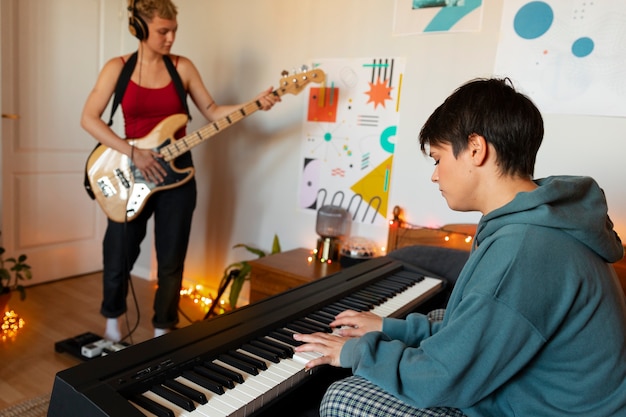
A structured practice keeps frustration at bay. Working on one thing for too long leads to diminishing returns. You know the feeling – when your hands suddenly won’t cooperate and even “Twinkle, Twinkle, Little Star” seems impossible. That’s your cue to switch gears. Like a dog chasing its tail, relentless repetition never gets you anywhere.
- Focus on the Details
There’s a difference between playing the piano and practicing it. Playing involves running through pieces you already know. Practicing means focusing on the areas that give you trouble. It’s about isolating tricky measures and attacking them with the intensity of a toddler demanding snacks.
When faced with a particularly gnarly section, slow it down to a crawl. Play each note deliberately, ensuring accuracy over speed. Sloppy practice reinforces mistakes, turning them into bad habits that are harder to fix later.
Whether preparing for the ABRSM exams or auditioning for music institutions like the Royal Academy of Music, piano students in London are typically driven to strive for perfection by the competitive atmosphere. To succeed in such cutthroat settings, meticulous attention to detail is essential. To help you navigate these complexities and keep up with the hectic pace of city life, WKMT provides structured instruction.
Metronomes can be maddening, but they’re your best friend for staying consistent. Think of it as a stern coach who claps in time rather than shouts.
Don’t gloss over dynamics or articulation, either. Small details—like a sudden crescendo or a perfectly timed staccato—are what separate memorable performances from forgettable ones.
- 4. Mix Practice with Play
Not every session needs to feel like boot camp. While structure is essential, it leaves room for exploration and creativity. Play pieces you enjoy, experiment with new genres, or even compose something yourself. The piano isn’t just a tool for technical mastery; it’s a vehicle for expression.

Incorporating play reminds you why you started in the first place. Nobody picks up an instrument with dreams of perfecting scales. They do it because music is fun, engaging, and often a little magical. Letting yourself “just play” from time to time keeps that spark alive and prevents burnout.
Perhaps when you call a city like London home, you’re never far from a source of musical ideas. Going to a jazz club in Soho or a concert at the Southbank Centre are both great ways to stimulate your imagination. Your practice will become more pleasant and distinctive when you include these elements.
- 5. Don’t Forget to Warm Up
Jumping into a piano session without warming up is like diving into a cold pool without testing the water—a shock to the system—and not the good kind. Warming up gets your fingers, wrists and brain ready to go and sets the tone for good practice. It’s less of a chore and more of a necessary ritual, like sharpening a knife before slicing.
Start with scales, but don’t treat them as boring exercise. Use them as an opportunity to focus on evenness and precision. Play arpeggios shift through octaves like you’re gliding over clouds. Add dynamic changes—gentle crescendos and diminuendos—to make it interesting and purposeful.
Warm-ups aren’t just physical. They’re mental, too. They help you shift gears from the chaos of daily life to the focused mind needed for practice. Think of it as a musical pregame—a way to wake up your fingers and tune your attention.
A good warmup can also serve as a stress reliever for those living in London. If you’re looking for a peaceful way to pass the time on congested Tube trains or pressing job deadlines, try spending some time on scales. The peaceful studio environments at WKMT are ideal for this transition.
Practicing at home doesn’t have to be a slog. With a little structure, focus and a sense of humor, you can make progress without going mad. Start by setting a schedule, breaking your practice into chunks and focusing on the details. Don’t forget to record yourself or let loose and play unstructured now and then.
Quality, not quantity, is the mantra of efficient practice in London, where every second counts. Whether you’re just starting out and trying to get into a pattern, or you’re an experienced player trying to hone your technique, making use of the city’s resources can be incredibly beneficial.
Now, go practice—ideally when the neighbors aren’t home.

