
Day trading can feel overwhelming without the right tools. It’s a challenge many face, but with time and practice, you can find what works best. This guide will show how key platforms, software, and strategies make trading easier and smarter.
Keep reading—it just might change your trading game!
Essential Platforms for Day Trading
Day trading needs the right tools to keep up with fast price changes. Powerful platforms help track data, analyze markets, and make trades quickly.
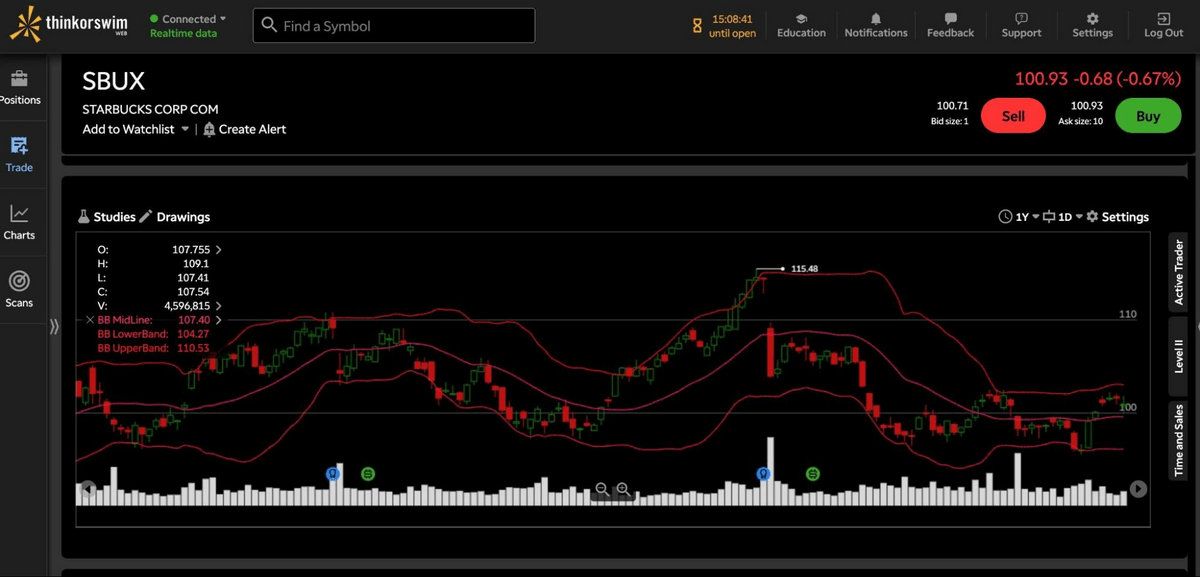
Strong Trading Platforms: eToro, thinkorswim
Some trading platforms shine for crypto traders. Two proven names worth considering are eToro and thinkorswim. Here’s a quick breakdown of what they offer.
Feature
eToro
thinkorswim
Cost
Free to start
Free
Users
Over 20 million globally
Millions of active traders
Market Access
Crypto, stocks, ETFs, forex
Stocks, crypto, ETFs, options
Mobile Trading
Intuitive app for on-the-go trading
Feature-packed mobile app
Unique Tools
CopyTrader for mirroring expert trades
Advanced charting tools and indicators
Community
Robust social trading features
Focuses on individual strategies
Customer Support
24/5 multilingual help
Dedicated team via TD Ameritrade
eToro simplifies trading for beginners with tools like CopyTrader. Watching experienced traders’ moves in real-time can teach valuable lessons. I’ve recommended it to younger clients who wanted to explore crypto. Its social features make it user-friendly.
On the other hand, thinkorswim caters more to advanced traders. Its mobile app has detailed features like customizable charts and data feeds. I often mention it to clients who focus on strategy-heavy trades, especially options and stocks.
Stock Market Simulators: eToro
eToro gives day traders a demo account with $100,000 in virtual funds. I use it to test trading strategies without risk. It mirrors real market conditions, including price fluctuations and bid-ask spreads.
The simulator helps me understand technical indicators like the Relative Strength Index (RSI) or candlestick charts before making real investments. Practicing on this platform saves money while sharpening my skills.
Practice makes profit when you trade smarter.
Mobile Trading Apps: thinkorswim
I use thinkorswim by TD Ameritrade for mobile trading. It’s free and packed with tools I need on the go. The app lets me trade, check market trends, and review stock charts anywhere.
Its user-friendly design makes placing orders quick and simple.
The charting tools are advanced but easy to use, even on a small screen. I adjust indicators like RSI or MACD with just a tap. Tracking crypto alongside stocks is seamless too, giving me better control over my trades anytime I need it.
Key Day Trading Software and Tools
Good tools make or break your trades. You need software for charts, stock screening, news feeds, and tracking your progress.
Charting Software: TradingView Pro+
TradingView Pro+ packs power into its tools for crypto traders. It offers 12 chart types, including candlestick charts, great for tracking market trends. I use up to 8 charts per tab to monitor multiple assets at once.
Over 100,000 indicators are available, so technical analysis becomes smooth and precise.
The platform is affordable, starting at $12.95/month after a free trial of 30 days. More than 30 million traders rely on it worldwide. With clear layout and customizable features, analyzing trading volume or RSI feels seamless here.
A good tool doesn’t just work; it works for you. This software nails that!
Stock screeners take strategy-building further with lightning-fast data filtering options!
Stock Screeners: Benzinga Pro, TradingView Pro+
Good charts tell half the story, but top-notch stock screeners close the loop. I trust Benzinga Pro for its lightning-fast updates on market trends and trading volume. The Essential plan costs $197 per month, which gives access to detailed financial data and sentiment analysis tools.
It’s like having a personal assistant that spots promising trades in real-time.
TradingView Pro++ also offers free screeners with existing subscriptions. Its filters help me sort stocks or crypto by performance metrics like relative strength index (RSI) or candlestick patterns.
This tool feels seamless when used alongside other technical indicators I love, like MACD. Both tools save time while uncovering hidden opportunities across markets—whether short sells or momentum trades!
News Sources: Benzinga Pro
Benzinga Pro is my go-to for real-time market news. It costs $37 a month for Basic and $197 a month for Essential, with a free 2-week trial. The platform delivers fast updates on market trends.
This speed gives me an edge in spotting trading opportunities early.
It also combines social trading insights with financial data. I use it to track cryptocurrency shifts and breaking news that impact stocks or crypto assets. This tool helps me react faster than others in volatile markets, minimizing risks while seizing momentum trades.
Trade Journals: Personalized digital logs
I use digital trade journals to track my crypto trades. They help me spot patterns and improve my strategies over time. It feels like having a clear snapshot of past trades, showing both wins and losses.
This data sharpens performance analysis and keeps emotions out of decisions.
These logs are free tools that store everything neatly in one place. Each entry records key details like dates, market trends, bid-ask prices, or stop-loss orders used during trades.
These insights save time when planning the next move in swing trading or momentum trading setups.
Next up: exploring technical analysis tools for smarter strategies!
Technical Analysis Tools
Technical analysis tools make sense of stock patterns and movements. Use them to spot trends, gauge momentum, and sharpen your timing.
Favorite Technical Indicators: MACD, RSI
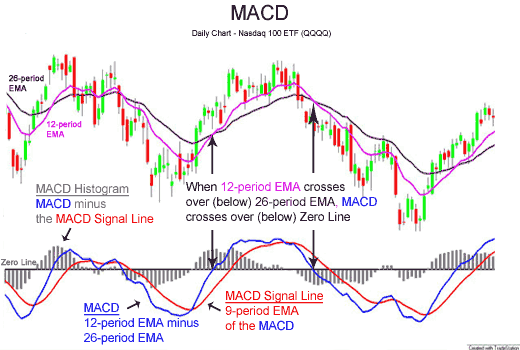
MACD and RSI are my go-to tools for analyzing crypto trends. They help me make quick decisions in fast-moving markets.
- The Moving Average Convergence Divergence (MACD) shows momentum. It uses two lines – one for short-term trends, another for long-term trends. When they cross, it signals a buy or sell opportunity. I check it daily to track market shifts.
- The Relative Strength Index (RSI) measures overbought or oversold conditions. A value above 70 means prices may drop soon. Below 30 suggests they might rise again. It’s my favorite tool to spot reversals in crypto trading.
- Combining MACD with RSI gives stronger signals. For example, if the MACD shows upward momentum and the RSI confirms low values, I feel confident buying.
- Both these tools work well on candlestick charts. They give clear signals when paired with trading volume analysis.
- These indicators are simple yet powerful for technical analysis, even for beginners aiming to manage risks better in day trading.
Level 2 Data: Advanced market depth analysisLevel 2 data gives me a clear view of the market. I see bid and ask prices in real-time, not just the best ones. It shows me how orders stack up behind each price point.
This helps spot where big players set their trades. With this, I time my entries better and catch momentum shifts early. Tools like electronic communication networks (ECNs) make access fast and smooth for trading stocks or crypto pairs effectively.
Fast trade execution tools work hand-in-hand with Level 2 data.
Fast Trade Execution Software
Fast trade execution software matters in crypto trading. Even a second’s delay can cost profit or increase financial risk. This tool helps me capitalize on small price movements without slippage.
Speed ensures my buy and sell orders hit the market at the right time, avoiding missed chances.
I use platforms with low-latency systems like ECNs for instant order matching. Faster trades mean higher gains during volatile moments in stocks or futures markets. Quick action aids momentum trading strategies and keeps leverage risks controlled efficiently.
Proper tools keep me ahead as I move to charting software next.
Educational Resources for Day Traders
Learning is key in day trading. Use online courses, books, and platforms to sharpen your skills and stay ahead.
Trading Education Platforms: Investors Underground
Investors Underground offers a strong education for traders. I’ve seen their training help others, and it’s worth mentioning the value. For $297 each month or $1,297 for bundles, you get access to detailed video lessons and pre-market streams.
Those live broadcasts give insights into trading strategies before markets move.
Their trade recaps break down wins and mistakes step-by-step. Crypto traders can learn quick decision-making skills from these examples. Clear explanations on momentum trading or risk management stand out here.
It’s packed with knowledge that applies across stock trading and crypto strategies alike.
Next up is a must-read book every trader should check out!
Best Day Trading Books: “A Beginner’s Guide to Day Trading Online” by Toni Turner
This book by Toni Turner is a must-read for anyone starting day trading. It offers simple steps to help traders understand the stock market, technical analysis, and trading systems.
I like how it breaks down complex ideas into easy terms. Priced at $21.99 with an Amazon rating of 4.6/5, it’s worth every penny.
What makes this guide special is its focus on practical strategies. It highlights tools like candlestick charts and stop-loss orders in clear detail. With examples of real trades, it keeps things relatable and engaging for beginners exploring intraday or momentum trading techniques in markets like stocks or crypto assets alike!
Online Trading Courses: Free and subscription-based options
I learn best by exploring free and paid trading courses. Bullish Bears offers free classes with a seven-day trial. It’s great for beginners looking to understand stock market trends or technical indicators like RSI.
For deeper learning, I use Investors Underground. Their bundles cost $1,297, or $297 monthly for access. They focus on advanced strategies like momentum trading and limit orders. These courses sharpen my skills in crypto and stock-trading quickly.
Hardware Essentials for Day Trading
A good setup means having sharp monitors, quick processors, and steady internet—tools that keep you ahead during fast trades. Read on for more!
Monitors: Recommendations for multi-screen setups
I use at least three monitors for day trading. Multi-screen setups let me analyze market trends, stock charts, and news at the same time. This setup saves time and reduces mistakes during fast trades.
One monitor shows charting tools like TradingView Pro+, while another tracks news or social media updates about crypto markets. The third screen handles trade execution platforms like eToro or thinkorswim.
High-resolution screens with quick refresh rates are a must to avoid lagging data in volatile markets.
Smart Route Configuration Tools
Smart route configuration tools boost trade execution. These tools cut down latency, making transactions faster. For crypto trading, every second counts. A delay can mean missing a good deal or risking more losses.
I’ve seen how they help reduce transaction costs and improve efficiency. By optimizing routes, trades hit the best prices in real-time. This can be crucial during high trading volume when market trends shift fast.
Advanced Trading Strategies
Master fast trades or ride market waves. Every strategy needs sharp tools and quick thinking.
High-Frequency Trading Strategies
High-frequency trading strategies rely on speed, precision, and advanced algorithms. I use them to analyze market inefficiencies in seconds. Trades happen fast—sometimes within milliseconds—with computer systems handling the heavy lifting.
I focus on crypto trading patterns with these strategies. They work best when paired with high-tech tools like electronic communication networks (ECNs). Books like “High-Frequency Trading Strategies” by Irene Albridge dive deep into techniques for success.
It’s a must-read for serious traders looking to leverage machine learning or automate trades effectively.
Swing Trading Techniques
Swing trading works well for crypto markets. I focus on price trends and market sentiment. Using candlestick charts helps spot reversals or momentum shifts. The RSI, a key technical indicator, shows overbought or oversold levels.
I often hold trades for days to catch larger moves in volatile assets like Bitcoin or Ethereum. Stop-loss orders limit risks if the trend flips suddenly. A mix of patience and timely decisions drives success here without constant monitoring like day trading demands.
Trading Psychology
Trading isn’t just numbers; it’s a mental game. Master self-control, or emotions will run the show.
Mastering the Psychology of Trading by Mark Douglas
Mark Douglas breaks down the mental game of trading in his book. He shows how fear and greed can mess with decisions. I like how he explains that discipline matters more than chasing gains.
The Amazon rating of 4.8/5 proves many traders agree.
Douglas teaches handling losses as part of trading, not failure. This tip saved me from overreacting to bad trades before. Crypto markets move fast, so keeping a cool head is key. At $24.99, this guide feels like an investment in mindset control, not just reading material.
Day Trading Legal and Regulatory Considerations
Day traders must follow strict rules to trade within the law. Know margin requirements and pattern day trader limits to avoid trouble with regulators like FINRA.
Day Trading Restrictions and Limitations
I watch out for the pattern day trader rule. It requires me to keep at least $25,000 in my account if I make four or more trades in five days on margin. Falling short of this amount means no extra trades until funds are restored.
This rule applies under FINRA guidelines and is strict for U.S.-regulated brokers.
Borrowing stocks to short can also be tricky. If no shares are available to borrow, I can’t place a short trade. Fees for borrowing vary and may increase if demand spikes. These rules keep risk low but can limit choices during fast-moving trades in stocks or crypto markets.
Stock Borrowing and Lending Essentials
Shorting stocks means borrowing shares, selling them at a high price, and buying them back later for less. This is key in short-selling strategies. It lets traders profit from falling stock prices.
I borrow securities from lenders, often brokers, to sell on the market.
Lenders charge fees for this service. Rates depend on demand; rare stocks cost more to borrow. Timing matters too—sell when prices are up, buy back when they drop. Missing the mark can lead to losses instead of gains.
Conclusion
Good tools make day trading smoother. A strong platform, sharp software, and reliable charts boost success. Learning never stops, so I focus on education too. Each tool earns its place in my setup for a reason—profit needs precision.
With the right gear, trading feels less like gambling and more like strategy.

